

Let’s be real. Searching for a legitimate remote job online can feel like a full time job in itself. You wade through endless listings, dodge scams, and wonder if any real high-ticket sales roles actually exist. The ones promising real earning potential, not just a low hourly wage, seem hidden behind a wall of generic search results.
Here is the truth. In 2026, remote work is a major and lasting part of the economy. Remote job postings have increased 20% over last year, according to the FlexJobs Remote Work Index.

The problem isn’t a lack of opportunities. The problem is finding the right ones without wasting weeks or months.

Many job seekers search for "remote jobs" and get buried in results for customer service or data entry, completely missing the high-paying closer roles they deserve.
That is where a smart indeed jobs strategy changes everything. While most people treat the job board indeed like a slot machine, you can use a targeted system to land remote jobs hiring immediately that pay real commissions.
This guide walks you through that system step by step. We combine fresh market insight from the Indeed Hiring Lab 2026 report with proven methods that active remote closers use every day. If you want to stop aimlessly searching and start seriously building your income, mastering your indeed job search is the first step. If you are brand new to the remote sales world, you can first read our complete guide on how to find the best remote jobs and build a high-ticket sales career to build a solid foundation.
Understanding the Remote High-Ticket Sales Job Market on Indeed
Now that we have a clear plan, let’s look at what the indeed jobs market actually looks like for high-ticket closers in 2026. The numbers are on your side.
Remote work is bigger than ever. According to the FlexJobs Remote Work Index, remote job postings jumped 20% in early 2026 compared to the end of 2025.
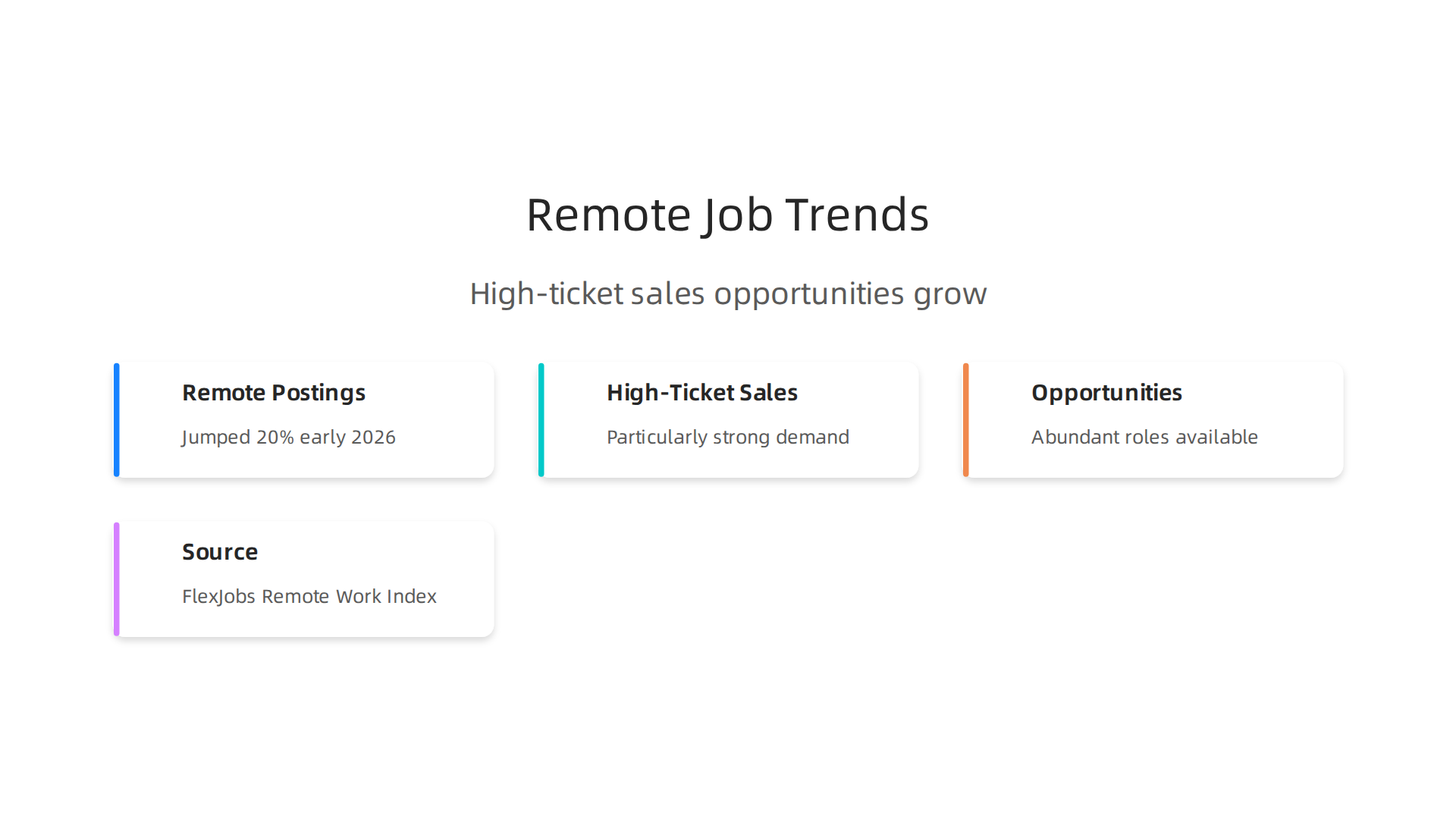
That spike is fueled by high-paying roles like sales closing, not just entry-level customer service. Companies across the US, UK, Canada, Australia, and New Zealand are all competing for the same talent: experienced remote closers who can handle commission-driven sales cycles.
Why does indeed remain the go-to job board indeed for these roles? Simple. It aggregates listings from thousands of company career pages, niche boards, and staffing agencies. A single indeed job search for “high-ticket closer” or “remote sales” pulls up opportunities you would never find on a specialized platform alone. For job seekers in all five countries, Indeed’s reach is unmatched.
Here are some key metrics you need to know:
- Time to hire: The average time from application to interview for remote sales roles on Indeed is about 10 to 14 days in 2026, faster than in previous years, per the Indeed Hiring Lab 2026 report.
- Salary ranges: High-ticket remote closers see base salaries between $50,000 and $90,000, with commission pushing total compensation into six figures. Even entry-level roles can offer $30,000 to $50,000 base plus uncapped commissions.
- Remote vs. hybrid split: According to Robert Half’s 2026 remote work data, about 23% of US employees work fully remote.

For sales roles, that number is higher and growing, especially in software and digital services.
The bottom line? There are real jobs hiring immediately for closers who know how to use indeed jobs the right way. If you have zero experience, don’t worry. Check out our guide to landing remote entry-level roles with no experience for a step-by-step plan.
In the next section, we will show you exactly how to set up your Indeed profile and search filters to surface only the best high-ticket closing opportunities.
Compensation Trends in High-Ticket Remote Sales
Now that you know the market is growing, let’s talk about what you can actually earn. High-ticket remote closing jobs on Indeed come in two main pay structures: commission-only and base salary plus commission.
Commission-only roles can feel risky, but the upside is huge. For example, some remote high-ticket closer listings on Indeed offer $5,000 to $20,000 or more per deal. That is not a typo. If you close two or three deals a month, your income can reach six figures quickly. Other positions pair a base salary (like $40,000 to $50,000) with uncapped commissions. Weeklies of $1,500 to $3,000 are common.
How do you spot the best opportunities? According to Glassdoor, the average salary for a remote high-ticket closer is around $89,344 per year.

But top performers earn much more. Mid-level closers bring in $5,000 to $10,000 monthly, while experienced ones can earn $10,000 to $30,000 a month, as reported by HireInSouth. This is significantly higher than traditional inside sales roles, where base salaries often cap around $60,000.
When you see a salary range on Indeed, focus on the commission potential listed in the job description. If a posting says “$5k-$20K per deal,” that is a top-tier opportunity. If it shows a modest base but mentions uncapped earnings, it is still worth exploring.
Want to learn how to tailor your resume for exactly these roles? Check out our guide on landing remote entry-level roles with no experience for actionable steps.
Optimizing Your Indeed Profile for Remote Sales Opportunities
Your Indeed profile is often the first thing recruiters see.

So let’s make it work for you. A polished profile can help you stand out on this massive job board, especially if you target high-ticket remote closing roles.
Start with your headline and summary. Include keywords that remote sales managers search for. Think “high-ticket closer,” “remote sales,” “objection handling,” “CRM,” and “lead generation.” Why? Recruiters often use Boolean search strings to find candidates. As explained in Indeed’s own guide, they combine words like AND, OR, and NOT to narrow their search. If your profile has the right terms, you’ll show up first.
Next, update your skills section. Add specific tools and abilities like Salesforce, HubSpot, cold calling, negotiation, and closing. These are exactly the skills hiring managers want. The more relevant skills you list, the better your profile will rank in their search results.
Now for the tricky part: staying discreet while employed. Indeed lets you set your “Open to Work” status to “only recruiters.” That means your current boss won’t see you’re looking. Go to your profile settings, choose “Recruiters only,” and you’re safe. You can also set job alerts for “remote jobs” and “jobs hiring immediately” so you never miss a good opportunity.
Finally, use Boolean search yourself to find the best openings on the platform. A short video on Mastering Boolean Search on Indeed shows you how to get results in minutes.
For more ways to tailor your whole application, read our guide on landing remote entry-level roles with no experience. It pairs perfectly with a strong Indeed profile.
Take five minutes now to update your profile. That small step could lead to your first big closing role.
Advanced Search Techniques to Find Legitimate Remote Closing Jobs
You have a polished Indeed profile. Now the real work starts. You need to find the actual roles that are worth your time. With thousands of remote jobs posted every day, you cannot scroll through every listing. You need a smarter way.
That is where Boolean search comes in.
Boolean search is a simple logic tool that uses the words AND, OR and NOT to narrow or broaden your search. Indeed fully supports this feature, and it is one of the only job boards that does. As explained in Indeed’s Boolean search guide, recruiters use these operators to find candidates. You can use the same trick to find jobs.
Here is a concrete example. Paste this into the Indeed search bar:
"remote clos*" AND ("commission" OR "high ticket") NOT "insurance"
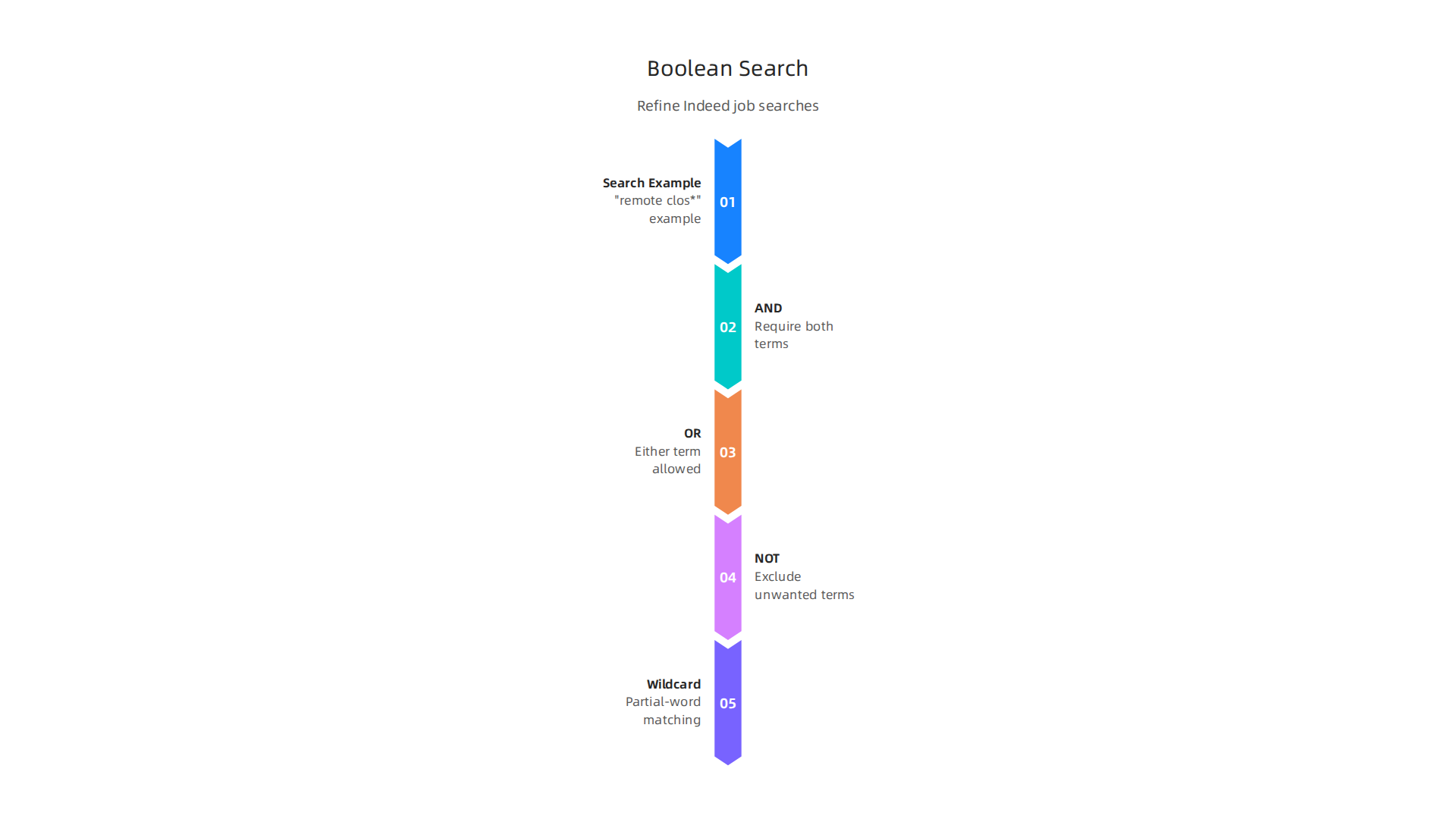
This string does three things. It finds jobs with the phrase “remote closer” or “remote closing” using the wildcard asterisk. It requires either “commission” or “high ticket” in the listing. And it blocks any role that mentions “insurance,” which is often a lower quality opportunity. Workable offers a similar guide on using Boolean search to find sales reps that shows how powerful these strings can be.
You can adjust this string to match your goals. Try:
("remote sales" OR "account executive") AND "closing" NOT "b2c"
This works especially well when you combine it with the location filter.
Use the Location Filter Strategically
Most people pick “Remote” as their location and stop there. That is a mistake.
Instead, choose “United States” or your country. Why? Many employers set the location to “United States” instead of “Remote” by accident or by default. If you only click “Remote,” you miss those postings. Test both options and compare your results.
Here is a quick comparison:
| Filter Choice | What You Get |
|---|---|
| “Remote” only | Clear remote listings, but fewer overall results |
| “United States” | Includes hybrid and location-based roles that still hire remote workers |
| Search with both | The full picture |
Try your Boolean strings with each location setting. The difference can be huge.
Set Up Job Alerts That Actually Work
Even with Boolean search, you should not check Indeed every hour. That is exhausting. Set up job alerts instead.
Create an alert using your best Boolean string. Choose “daily” delivery so you don’t get flooded. And here is a trick: use the “Exclude words” field in the alert settings to block keywords like “car dealership,” “insurance,” or “entry level” if they do not match your goals.
This keeps your inbox clean and only shows you high-quality leads.
To see all of this in action, watch this short video on Mastering Boolean Search on Indeed. It walks through the process in minutes.
For even more help with your job search strategy, read our guide on how to find the best remote jobs and build a high ticket sales career. It covers the full process from search to offer.
Here is your quick action plan:
- Copy the Boolean string above into Indeed’s search bar this week
- Set location to both “Remote” and “United States”
- Create a daily job alert with your best string
- Apply fast to any role that fits
A few minutes of smart searching can open the door to a high-ticket closing career.
Evaluating Job Listings: Red Flags and Green Lights
You have your Boolean search strings ready and your job alerts set. Now comes the tricky part. Not every result that pops up in your Indeed job search is a real opportunity. Some are scams. Others are just low-quality roles that waste your time.
You need to know the difference fast.
Red Flags to Watch For
Scammers have gotten smarter. But they still leave clues. Here are the biggest warning signs to look for when scanning job board Indeed listings:
- Asking for money upfront. No legitimate employer will ask you to pay for training, background checks, or equipment. That is a major red flag. Indeed’s guide on how to know if a job is a scam calls this out clearly.
- Vague company information. If the job description does not name the company or gives a generic email address like
hiring@outlook.com, be suspicious. - Unrealistic pay promises. “Make $20,000 in your first month with no experience” is a scam bait. Legit remote jobs pay well but not that well without proof.
- Fake interviews. Scammers sometimes rush you into a text-based “interview” and then ask for personal details like your Social Security number. Indeed also has a list of 17 common job scams that covers these tactics.
- Pressure to act fast. Real employers give you time. Scammers want you to say yes before you think.
For more detail on spotting scams, the team at DailyRemote put together a thorough remote job scams prevention guide that breaks down every major scam type and how to avoid it.
Green Lights That Mean You Can Apply
When you see these signs, you can feel good about moving forward:
- Clear, detailed job description. The listing includes the day-to-day tasks, required skills, and expected outcomes. It does not just say “sell stuff.”
- Verifiable company website. The company has a real website with a team page, contact info, and a history. Check it before applying.
- Transparent compensation. The listing explains base pay, commission structure, and any bonuses. If it says “uncapped commission” but gives no range, ask in the interview.
- Company reviews exist. Look for the company on Glassdoor or Indeed’s own company pages. If you find a few reviews from real employees, that is a good sign.
How to Research Company Legitimacy
Don’t stop at the listing. Take five minutes to dig deeper:
- Visit the company’s website. Does it look professional? Is there a clear “About Us” page? A physical address?
- Search for the company name + “scam” or “review.” See what comes up.
- Check Indeed’s company page. Click the company name on the listing to see ratings, reviews, and other jobs they have posted.
- Use LinkedIn. Look for current employees and see how long they have worked there.
If everything checks out, you are likely looking at a real role. And that is when you can apply with confidence.
For more help on building a full strategy from search to offer, read our guide on how to find the best remote jobs and build a high ticket sales career. It covers everything from writing a strong resume to negotiating offers.
Common Scams on Indeed and How to Avoid Them
Even after you spot the obvious red flags, some scams on Indeed jobs are trickier. Let’s look at the most common ones and how to stay safe.
Fake interview processes and check scams. Scammers often rush you into a text or video interview, then send a fake check for “equipment” and ask you to wire back the extra. This is a classic check scam. The job never existed. If any interview feels rushed or asks for payment upfront, it’s a scam. Indeed has a full guide on interview scams with 15 warning signs.
Ghost jobs that are never filled. Some employers post a job board Indeed listing with no intention of hiring. They might be building a talent pool or testing the market. How to spot them: the job is reposted every few weeks, you never get a response, or the description is extremely vague. Always check how long the listing has been live. If it’s older than 30 days with no updates, it’s likely a ghost.
Safe practices for sharing personal information. Only give out personal details after you’ve verified the company. That means a real website, a real person on LinkedIn, and a proper interview. Never share your Social Security number, bank account, or payment info during the application process. Use official company email domains, not free services like Gmail.
For more help finding real opportunities, check out our guide on how to land remote jobs entry level with no experience. It covers safe job boards and application tips.
Crafting a Compelling Application for Remote Sales Roles
Now that you know how to spot fake jobs, let’s talk about how to stand out for the real ones. Getting hired for remote sales roles takes more than just clicking apply. You need to show employers you can handle the unique demands of working from home.
Tailor your resume and cover letter for high-ticket closing. Generic applications get ignored. Use keywords that match the job description and pass applicant tracking systems (ATS). For remote sales roles in 2026, that means focusing on terms like revenue generation, quota attainment, CRM expertise, and B2B sales. One study highlights 60+ high-impact sales resume keywords that can boost your ATS ranking. Another list of the top 10 sales resume keywords for 2026 includes revenue generation and client relationship management. Sprinkle these naturally into your resume and cover letter.
Highlight remote-specific skills. Employers want proof you can work without someone looking over your shoulder. Showcase your self-discipline, async communication, and CRM proficiency. If you have experience with tools like Salesforce or HubSpot, list them. If you’ve closed deals over Zoom or Slack, mention that too. These skills show you can thrive in a virtual team. For more ideas on building these skills from scratch, check out our guide on how to land remote jobs entry level with no experience.
Use Indeed’s “Apply on Company Site” button. Here’s the thing: Quick Apply is fast, but it often sends your application into a black hole. For remote sales roles, especially high-ticket closing jobs, always use the “Apply on Company Site” option. This lets you customize your cover letter, include a portfolio if you have one, and show you took the extra step. It also gets your resume directly into the company’s ATS, not Indeed’s generic database. It takes more time, but it works much better.
Your application is your first sale. Make it count. For more tips on finding and landing the best remote opportunities, explore our complete resource on how to find the best remote jobs and build a high-ticket sales career.
Resume Keywords for High-Ticket Sales Roles
So what are employers actually looking for when you browse indeed jobs for remote closing roles? They scan for two things: specific hard skills and strong soft skills. Here is what you need to include.
Hard skills matter first. Recruiters on indeed job search want to see closing techniques, pipeline management, and CRM expertise with tools like Salesforce or HubSpot. A quick look at active high ticket sales closer remote jobs on indeed shows these keywords appear in almost every posting. List them clearly.
Soft skills seal the deal. High-ticket sales requires consultative selling, resilience, and active listening. These prove you can build trust without ever meeting face to face.
Now weave them in naturally while quantifying everything. Don’t just list keywords. Use numbers to back them up. For example:
- Instead of "used CRM," write "Managed a pipeline of 50+ leads and closed $200k in monthly revenue."
- Instead of "good at listening," write "Used active listening to uncover client pain points and increase close rate by 30%."
This approach helps you get past ATS filters and impress hiring managers. If you want to know the full range of mid level to experienced high ticket closers can earn, this salary guide breaks it down further.
In 2026, the job board indeed rewards resumes that show proof. When you combine the right keywords with real numbers, you stand out for jobs hiring immediately and land more interviews. Start updating your resume today.
Networking and Following Up After Applying on Indeed
You spent time updating your resume with the right keywords and tailored it for that high-ticket closer role. You hit submit. Now what? Most people stop there. But in 2026, the candidates who actually get hired follow up. And they do it smartly.
Start by using Indeed’s employer insights. When you look at a job listing on the job board indeed, you can often see the company’s page and sometimes even the name of the person who posted the role. That’s gold. It gives you a real person to reach out to instead of sending your application into a black hole.
Once you have that name, hop over to LinkedIn. Send a polite connection request mentioning you applied for the role on indeed jobs and are excited about the company’s work. Keep it short. No one wants to read a novel in a connection request.
Then craft a short follow-up email. Here’s the trick: add value. Don’t just say "I applied, please review." Instead, reference something from the job description and share a quick insight. For example:
"Hi [Name], I applied for the Remote Sales Closer position on Indeed yesterday. I noticed you’re expanding into the healthcare space. I’ve closed six-figure deals in that vertical and would love to share a quick insight on what’s working right now."
That’s useful. That gets attention.
While you’re networking, make sure your resume is still optimized with the right keywords. Even when following up, hiring managers may pull up your application again. A strong set of sales keywords helps you pass any secondary ATS review. If you haven’t already, check out this list of high-impact sales resume keywords to make sure your resume is ready for a second look.
Finally, leverage LinkedIn alongside Indeed for referrals. Comment on company posts. Engage with the hiring manager’s content. Ask your existing network if they know anyone at the company. Referrals dramatically increase your chances of landing an interview.
If you’re still building your remote sales career from scratch, you might find this guide on how to land remote jobs with no experience helpful.
Networking turns a submitted application into a real conversation. Start your follow-up today.

Tracking Your Job Search Metrics and Iterating
You have your networking system running. But are you tracking your numbers?
Most people treat the job board indeed like a slot machine. They pull the lever and hope for the best. In 2026, with over 37 million people working remotely at least part of the time, hope is not a good strategy.
You need to track your metrics. Think of your indeed job search as a sales funnel. Your goal is to find and fix the biggest leak.
Which metrics matter?
- Applications per week: Are you sending enough to hit your goals?
- Response rate: How many of your indeed jobs applications get a reply? If you send 20 and hear back from only 1, your resume likely needs work.
- Interview conversion rate: How many initial calls turn into real interviews? How many interviews turn into offers?
How to track
Indeed has a built-in Job Tracker. It is a perfect starting point. But for a deeper view, use a simple spreadsheet. Track the job title, company, date applied, and the result.
When to pivot
Let the data decide your next move.
- Low response rate: Your resume might not be passing the ATS systems for jobs hiring immediately. You can learn how to fix that in this guide on how to land remote jobs with no experience.
- Low interview conversion: Your sales skills or the specific niche could be the issue. Explore where the best opportunities really are by reading about how to find the best remote jobs and build a high-ticket sales career.
- Winning but want more: If you are already landing roles but want a bigger challenge, check out this resource on how to land enterprise remote sales roles with six-figure pay in 2026.
Don’t just apply and pray. Track, analyze, and iterate. Your future remote closing career depends on the insights hidden in your data.
Summary
This article shows a step-by-step system for using Indeed to find legitimate, high-ticket remote sales (closer) roles in 2026. It explains why remote high-pay sales jobs are growing, summarizes compensation ranges and hiring timelines, and demonstrates how to optimize your Indeed profile with the right keywords and skills. You’ll learn concrete Boolean search strings, location-filter tactics, and how to set job alerts that surface roles hiring immediately. The guide also covers how to spot scams, research company legitimacy, and craft applications that beat ATS filters and attract hiring managers. Practical follow-up and networking tips explain how to turn applications into interviews, and a simple tracking framework helps you measure and improve results. Read this to stop wasting time on low-quality listings and start landing high-ticket remote closing opportunities.