

Introduction: The Remote Closing Gold Rush and the Job Search Maze
Imagine earning a five-figure monthly commission while working from your living room. That is the promise of remote high-ticket closing. The income potential is real, and the flexibility beats almost any office job. But here is the catch: finding a legitimate role can feel like a maze.
Most job seekers hit the same wall. You search for linkedin jobs and get flooded with thousands of results. You try glassdoor jobs and see great salaries but wonder which ones are real. Then you check ziprecruiter jobs and feel overwhelmed by noise.

Information overload leads to wasted time. Scams hide inside real opportunities. And the career path remains unclear.
In 2026, the remote sales landscape is growing fast. According to a guide on finding remote work, using LinkedIn strategically to connect with professionals and engage in communities is one of the best ways to stand out [source: Innovative Strategies to Find Remote Work in 2026]. But knowing where to start is half the battle.
That is why this guide exists. We will walk you through a proven framework that uses LinkedIn, Glassdoor, and ZipRecruiter together. The goal is simple: help you cut through the noise, spot the real deals, and land a legitimate remote closing job. If you want to learn more about what makes a strong high-ticket closer, check out our guide on how to find the best remote jobs and build a high-ticket sales career.
Ready to stop guessing and start closing? Get Started with our full library of resources designed to help you succeed.
Why LinkedIn, Glassdoor, and ZipRecruiter Are Essential for Remote Closing Candidates
Here is the truth. Not every job platform is built for high-ticket closing. And if you use them all the same way, you will waste time. But when you know what each platform does best, your search gets a lot easier.
LinkedIn is your networking engine. Most high-ticket remote closing roles never get posted publicly. They are filled through referrals and direct connections first. That is why a smart linkedin job search matters so much.

You can find hiring managers, join sales groups, and build a profile that shows off your skills. A 2026 comparison of major job platforms ranked LinkedIn as a top app for professional networking [source: LinkedIn vs Indeed vs Glassdoor vs ZipRecruiter: Ranked]. To go even deeper, check out our guide on how to find the best remote jobs and build a high-ticket sales career.
Glassdoor is your truth meter. Scams are real in remote sales. Glassdoor helps you spot them before you waste your time. You can read company reviews, see real salary ranges, and check employee ratings.
Right now there are thousands of sales effectiveness jobs listed on Glassdoor [source: Sales effectiveness Jobs in Remote]. That transparency helps you focus on the legitimate opportunities.
ZipRecruiter is your speed tool. When you want to apply fast and cover more ground, ZipRecruiter helps you do that. It matches your resume to relevant openings and sends alerts straight to your inbox. It is not built for deep networking, but it is great for volume.
A 2026 study from Boston University looked at over 600,000 job applications. The finding was clear. Using multiple platforms gives you a much better response rate [source: Announcing The 9 Best Job Search Sites of 2026]. That means you should not pick just one. Use all three.
Here is the simple takeaway. LinkedIn gets you noticed. Glassdoor keeps you safe. ZipRecruiter speeds up your search. Together, they cover the full remote closing market in 2026.

Ready to put this into action? Contact Us and get personalized advice on your remote sales career.
Optimizing Your Profile and Resume for High-Ticket Remote Sales Roles
You have your platforms picked out. You know where LinkedIn, Glassdoor, and ZipRecruiter fit in your search. But here is the part most people miss. It does not matter which platforms you use if your profile and resume do not scream "I can close high-ticket deals remotely."
So let’s fix that.
Start with your LinkedIn headline. This is the first thing recruiters see. Do not just write "Sales professional." Write something like "High-Ticket Remote Closer | Consultative Selling | Closed $500K+ in Q1 2026."

That one change tells hiring managers you understand the game. Keywords like "high-ticket closing," "remote sales," and "consultative selling" also help LinkedIn’s algorithm surface your profile in recruiter searches. And when recruiters can find you, you stop hunting for jobs and start getting inbound messages. A well-optimized profile can actually increase those inbound recruiter messages by up to 3x.
Push your about section past generic. Hiring managers in high-ticket sales read about sections fast. Lead with a specific, measurable achievement. For example: "Closed $1.2M in enterprise deals working fully remote in 2025." Then connect that result to the company you are applying for. The same rule applies to cover letters. A 2026 ResumeGo study found that tailored cover letters make you 55% more likely to get an interview [source: Remote Job Cover Letter: Templates and Examples That Work]. That is a huge difference. Lead with a strong hook that shows results, not a generic opening line [source: Cover Letter Examples for Every Job Type in 2026].
Your resume must prove remote readiness. Include specific tools you use for virtual sales. Think Zoom, CRM systems like Salesforce or HubSpot, and communication tools like Slack or Calendly. List metrics. Managers want to see numbers and conversion rates, not just job duties. For more ideas, check out our guide on how to find the best remote jobs and build a high-ticket sales career.
The bottom line is simple. Your profile and resume are your first sales pitch. Make them count.
Want personalized advice on your profile or resume? Contact Us and our team can help you land your next high-ticket remote closing role.
Advanced Search Strategies on LinkedIn Jobs to Find Remote Closing Opportunities
Your profile is polished. Your resume is dialed in. Now comes the fun part. Actually finding the high-ticket remote closing roles that are hiding in plain sight. A basic search for "sales" on linkedin jobs will bury you in noise. You need surgical precision.
Master Boolean search queries. This is the single biggest shortcut for finding hidden listings. Boolean search lets you combine keywords and operators to narrow down results. For example, a search like ("high ticket closer" OR "remote account executive") AND (uncapped commission OR 1099) filters out the junk and shows you exactly what you want.
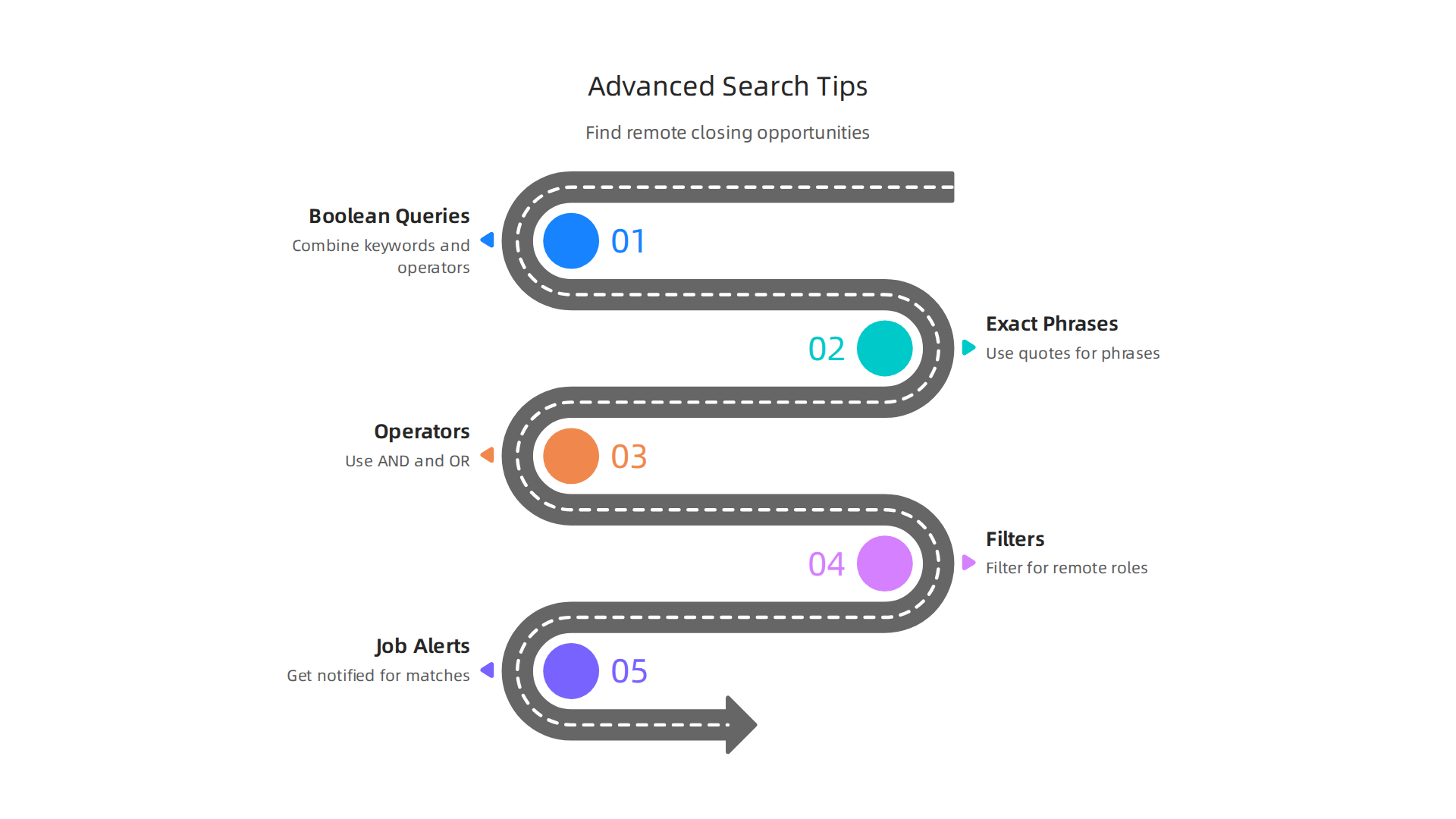
The video How to Find Relevant Jobs Fast on LinkedIn Using Boolean Search breaks this down visually. And the team at Close.com has a great guide on Boolean Search on LinkedIn that explains the exact operators. Use quotes for exact phrases, use "OR" to expand your options, and use "NOT" to exclude stuff like "intern" or "entry level." This works the same way on glassdoor jobs and ziprecruiter jobs too. A quick search for high ticket closer on Glassdoor shows 248 current openings in Remote alone. Boolean search helps you find the rest that are hiding.
Do not skip the advanced filters. Most people just hit the "Remote" toggle and call it a day. You can go deeper on linkedin job search. Filter by "Job Function" and select "Sales." Filter by "Date Posted" and select "Past 24 hours." This keeps your results fresh. You can also filter by company size. Startups and mid-size companies often have the best uncapped commission structures for remote closers. If you are just getting started, check out our guide on how to land remote jobs with no experience in 2026.
Set up smart job alerts. Here is the thing. Most people apply hours or days after a job is posted. By then, recruiters already have dozens of applicants. Set up alerts that match your specific Boolean query and choose "Daily" or "As they happen." When an alert pings you, apply within the first hour. This is how you get your resume seen before the pile grows. For more structured strategies on finding the perfect roles, read our breakdown of how to find the best remote jobs and build a high-ticket sales career.
These advanced search strategies will move you past luck and into a repeatable system.
Want a custom Boolean search string for your specific goals? Book Now and we will build your high-ticket job search blueprint together.
Navigating Glassdoor and ZipRecruiter: Tips for Identifying Legitimate Remote Closing Jobs
LinkedIn is a goldmine for remote closing roles, but you should not ignore other job boards. Glassdoor jobs and ZipRecruiter jobs offer their own strengths and hidden traps. The trick is knowing how to use them safely and effectively.
Use Glassdoor to Vet Employers First
Glassdoor is your best friend for one thing. Background checks. Before you apply to any listing on Glassdoor jobs, read company reviews and salary reports. Real employees share what it is actually like to work there. This helps you spot fake postings and negotiate better pay later.
The Federal Trade Commission recommends looking up the company name plus words like "scam," "review," or "complaint" to see if others have raised red flags. Glassdoor even has its own guide on spotting work-from-home scams, which says real employers have a track record online. If a company has zero reviews or only glowing five-star posts from brand new accounts, be careful.
Use ZipRecruiter Filters with Precision
ZipRecruiter jobs can flood your inbox with noise. That is actually the challenge. The volume is high, but the quality varies a lot. Use their filters aggressively. Select "Remote" as the location and "Commission" or "Uncapped Commission" under pay. This cuts out the part-time call center junk and shows you real high-ticket closing opportunities.
Also check the posting date. Apply to roles posted in the last 24 hours only. Older posts on ZipRecruiter often have hundreds of applicants already.
Watch for These Red Flags
Remote closing jobs attract scammers. Here are the warning signs to watch for on any platform, including Glassdoor jobs and ZipRecruiter jobs:
- Upfront fees. Legitimate employers never ask you to pay for training, software, or certification.
- Vague job descriptions. If the role says "make money fast" or "work from home with no experience needed," walk away.
- Typos and poor grammar. Fraudulent postings often have strange language or spelling errors.
- Unrealistic promises. Guaranteed six-figure income in your first month with no skills? That is a scam.
Glassdoor itself warns that if an offer sounds too good to be true, it probably is. Learn more about avoiding fake listings in our detailed guide on how to land remote jobs with no experience.
Your Next Step
You now know the platforms. You know the filters. And you know the red flags. The only piece missing is a strategy that fits your specific skills and income goals. That is where personal guidance helps the most.
Book Now and let us build a custom job search plan that targets the best remote closing roles for you, while steering clear of the scams.
Building Community and Overcoming Isolation During Your Job Search
Job hunting alone from home can feel lonely. You sit at your laptop, send applications, and hear nothing back for days. It drains your motivation fast. The good news? You do not have to do it alone.
Joining a community like Remote Closers Club gives you support and insider tips. Other job seekers share real leads, review companies, and keep you accountable. A 2026 guide on landing remote jobs suggests you join remote-friendly Slack groups and LinkedIn communities and show up to add value, not just ask for favors. That is solid advice.
Active LinkedIn jobs networking also helps. Join groups related to remote sales or high-ticket closing. Comment on posts from hiring managers and recruiters. Ask thoughtful questions. This opens doors to referrals and unlisted roles. In 2026, industry experts recommend engaging with remote work communities and participating in discussions on LinkedIn to connect with professionals who can help you.
Accountability partners and mastermind groups make a big difference too. When you know someone expects an update from you, you apply to more jobs and stay persistent.
Ready to find your support system and land the right role faster?
Book Now and let us create a personalized plan that connects you with the best linkedin job search strategies and communities for your goals.
Writing a Standout Cover Letter for Remote High-Ticket Sales Positions
Now that you have a support network, let’s talk about your cover letter. Many applicants skip this step. That is a mistake. A 2026 ResumeGo study found tailored cover letters make you 55% more likely to land an interview. For remote roles, that number matters even more.
For high-ticket closing, your cover letter must highlight specific wins. Do not just list job duties. Say something like, "Closed $50,000 in deals last quarter working fully remote." That shows you can produce results without being in an office. Experts suggest leading with a measurable achievement right in your first sentence. It grabs attention fast.
Also show your remote communication skills. Mention tools you use like Zoom, Slack, or a CRM. Hiring managers want to know you can handle objections and build trust over a screen.
Here is a tip that works well. Include a brief video introduction link in your cover letter. Record a 60-second clip explaining why you are a great fit. This makes you stand out from other applicants on linkedin jobs and ziprecruiter jobs.
A strong cover letter can open doors to roles you thought were out of reach. To get personalized advice on your application strategy, Contact Us and we will help you fine-tune your approach.
Measuring Success: Income Expectations and Career Growth in Remote High-Ticket Sales
Now that your cover letter is ready, let’s look at the numbers. How much can you actually earn as a remote high-ticket closer? For newcomers, income often starts between $40,000 and $70,000 per year, reports a 2026 remote closing guide. But experienced closers can earn $100,000 or more. Some roles offer total compensation between $120,000 and $250,000, especially in industries with large deal sizes.

Your career does not have to stop at closing. Many successful closers move into team lead roles, become recruiters, or even start their own agencies. This path gives you more control over your earnings and schedule. If you want to explore the full range of opportunities, check out our guide on how to build a high-ticket sales career.
Setting clear income goals helps you stay focused. Track your close rate, average deal size, and calls per day. Platforms like linkedin jobs and glassdoor jobs list roles with clear salary ranges, so you can target the right opportunities. Use a simple spreadsheet or a CRM to monitor your progress.
Ready to take the next step? Get Started with our guides and resources to accelerate your growth as a remote closer.
Common Pitfalls and How to Avoid Them
Now that you have a clear picture of the income potential, let’s look at some common mistakes people make on the job hunt. Avoiding these can save you time and frustration.
Pitfall 1: Mass applying without tailoring your approach.
It is easy to click "Easy Apply" on every linkedin jobs post you see. But sending out 50 generic applications a day rarely works. It leads to rejection fatigue. Instead, pick 5 to 10 quality roles that match your skills. Then, write a short cover letter for each one. A more focused linkedin job search will get you better results. According to a 2026 analysis, response rates vary a lot between platforms, so a targeted strategy matters more than volume.
Pitfall 2: Ignoring how each job platform works.
Did you know that each platform has its own set of rules? For example, applying through glassdoor jobs or the company website might get you a faster reply than a quick automated form. Make sure to use ziprecruiter jobs and other boards the right way. Check out our guide on remote high-ticket sales jobs indeed for a deeper look at platform strategies.
Pitfall 3: Forgetting to follow up.
You send an application or finish an interview, then you just wait. That is a lost opportunity. A short, polite follow-up email can show the hiring manager you are truly interested. This simple step can put you ahead of other candidates who applied and forgot.
Avoiding these small mistakes can make a big difference in your job search. If you are just starting out, our guide on how to land remote jobs entry level might be a helpful next step.
Ready to find the right role for you? Get Started with our resources and accelerate your career as a remote closer.
Leveraging LinkedIn Premium and Other Paid Tools for Your Job Search
You already know that mass applying on free linkedin jobs boards leads nowhere. But what if you could get a real edge before you even send an application? That is where paid tools like LinkedIn Premium come in. A Premium subscription gives you direct access to hiring managers through InMail. You also see profile insights, like how you compare to other applicants, and who has viewed your profile. This extra data helps you focus your linkedin job search on the right roles. The key is to use the free trial first. If you actively send InMails and refine your approach, the return on investment is strong.
Another powerful technique is using Boolean search. This lets you combine keywords with operators like "AND" and "NOT" to find very specific job listings. The Close.com blog explains how Boolean search works and gives examples you can copy.
Beyond LinkedIn, tools like Lusha help you find direct email addresses of recruiters. And HubSpot CRM lets you track each application and follow-up so you never lose a lead. For high ticket closing roles specifically, platforms like Glassdoor list hundreds of opportunities.
Want to build a complete plan that combines paid tools with smart searching? Our guide on how to find the best remote jobs and build a high ticket sales career walks you through the whole process step by step.
Ready to put these premium strategies to work? Book Now for a personalized consultation on your remote sales job hunt.
How to Spot and Avoid Remote Closing Job Scams
You have the tools and the strategy. But watch out. Scammers know that remote jobs are in high demand. They post fake listings on sites like linkedin jobs, glassdoor jobs, and ziprecruiter jobs to catch job seekers off guard. The good news? You can spot them easily.
Scams often ask you to pay an upfront fee for training or materials. They might push you to share personal details like your Social Security number too early. And they always promise earnings that sound way too good to be true. The FTC suggests you search the company name plus words like “scam” or “review” to see what others say.
Real employers have a clear online presence. They use professional language with few typos. A Glassdoor guide warns that fake postings often have strange grammar or errors. So look closely at the job description. If it reads like a mess, move on.
Always verify before you apply. Check the company page on LinkedIn for real employees and recent posts. Read honest feedback on Glassdoor. And run a quick search with the business name plus “complaint.” If you do not find solid info, that is a red flag.
Want to build a safe, step by step plan for your linkedin job search? Our guide on how to find the best remote jobs and build a high ticket sales career covers everything from spotting scams to landing real offers.
Ready to take action without the risk? Get Started with our resources today.
Summary
This guide shows how to find legitimate remote high-ticket closing roles by using LinkedIn, Glassdoor, and ZipRecruiter together with a focused, platform-specific strategy. You’ll learn how to optimize your LinkedIn headline and resume to prove remote readiness, use Boolean queries and advanced filters to surface hidden listings, and set fast alerts so you apply early. The article explains how to vet employers on Glassdoor, how to filter ZipRecruiter for real commission roles, and the red flags that signal scams. It also covers writing tailored cover letters (including short video intros), building supportive communities to beat isolation, and realistic income expectations and career paths. Follow these steps to shortcut wasted applications, increase interview invites, and land higher-quality remote closing offers.