

You have seen the lifestyle. Work from anywhere. Close big deals. Earn a real income without a boss breathing down your neck. High ticket remote closing makes that possible.

But getting there? That is a different story.
The truth is, most beginners drown in confusion. You search for part time remote jobs and find nothing but low pay and long hours. You look at remote companies hiring and wonder if you even have the right skills. You might even think about hiring a freelancer overseas just to handle parts of your sales process while you figure things out. None of it moves the needle without a clear direction.
Companies hiring remote employees in 2026 are not looking for lucky gamblers. They want skilled closers who can handle objections, build real relationships, and close deals consistently over the phone or video. The problem is that most aspiring closers do not know how to bridge the gap between where they are now and where they want to be.
That is exactly why this article exists.
We put together a practical roadmap grounded in real data and proven strategies. You will learn exactly how to spot legitimate opportunities, build the right skills, and avoid the traps that waste your time and money. We also tackle the biggest obstacles head on. Information overload. Skill gaps. And the frustration of trying to find quality roles when the market feels crowded.
Whether you are a complete beginner or someone looking to level up, this guide gives you the clarity you need. Start by checking out our guide on how to land remote jobs with no experience for a deeper look at entry level options.
No fluff. No hype. Just actionable steps to help you land a real remote closing role starting today.
Why Remote High-Ticket Sales Is a Legitimate Career Path in 2026
You might still have doubts. Is remote high-ticket sales actually a real career? Or is it just another hype bubble?
Here is the truth. In 2026, remote sales is booming. The rise of cloud based business tools has pushed more companies to hire remote employees across time zones. According to industry analysis, this profession is poised for continued expansion in 2026.
Top closers in this field regularly earn six figures. Not someday. Right now. Companies pay well because closing high ticket deals requires real skill and consistency.
This is not the same as hiring a freelancer overseas to handle small tasks. These are full career roles with real pay, real training, and real growth potential. They are also nothing like most part time remote jobs you find on random job boards.
If you want to see what building a career in this space looks like, check out our guide on how to build a successful high-ticket sales career.
Overcoming the ‘Too Good to Be True’ Perception
It is totally normal to be suspicious. You hear "make six figures from your laptop" and your scam radar goes off. That is healthy. There are a lot of bad actors out there.
But here is how you separate the real opportunities from the fake ones.
First, look at the company. Are they a real business? Do they have a website that lists their products or services? Can you find them on review sites like Glassdoor? Legitimate companies hiring remote employees want to be found. They stand behind their brand.
Second, look at the offer itself. Is the pay structure clear? Real high-ticket sales roles offer a base salary plus commission. They do not promise you a million dollars overnight. They offer a solid career path.
Think about the difference between this and a low stakes gig. It is the difference between building a career and hiring a freelancer overseas for cheap labor. One is a professional path. The other is just a transaction.
Many part time remote jobs offer low pay and very little growth. Remote closing is the opposite. It is a high level skill that companies pay for because it drives real revenue. If a company is willing to pay you a base salary and train you, that is a strong sign of legitimacy.
If you want a clear system for vetting companies and landing your first role, read our guide on how to find the best remote jobs and build a high-ticket sales career.
It will help you skip the scams and find the real opportunities.
Realistic Income Expectations for Remote Closers
You probably want to know the actual numbers. What does a remote closer really earn? The answer depends on your experience, the niche you work in, and the commission structure at the company. But we can give you a clear picture.
Most legitimate roles offer a base salary plus commission. This structure protects you. You have a steady income while you learn. According to the 2026 Marketing and Sales Compensation Survey, this hybrid model is standard across industries because it rewards performance without leaving you hanging.
Here is what the income ranges look like in 2026:
| Experience Level | Typical Annual Income |
|---|---|
| Beginner (0 to 1 year) | $40,000 to $60,000 |
| Intermediate (1 to 3 years) | $60,000 to $120,000 |
| Top Performer (3+ years) | $150,000 to $200,000+ |
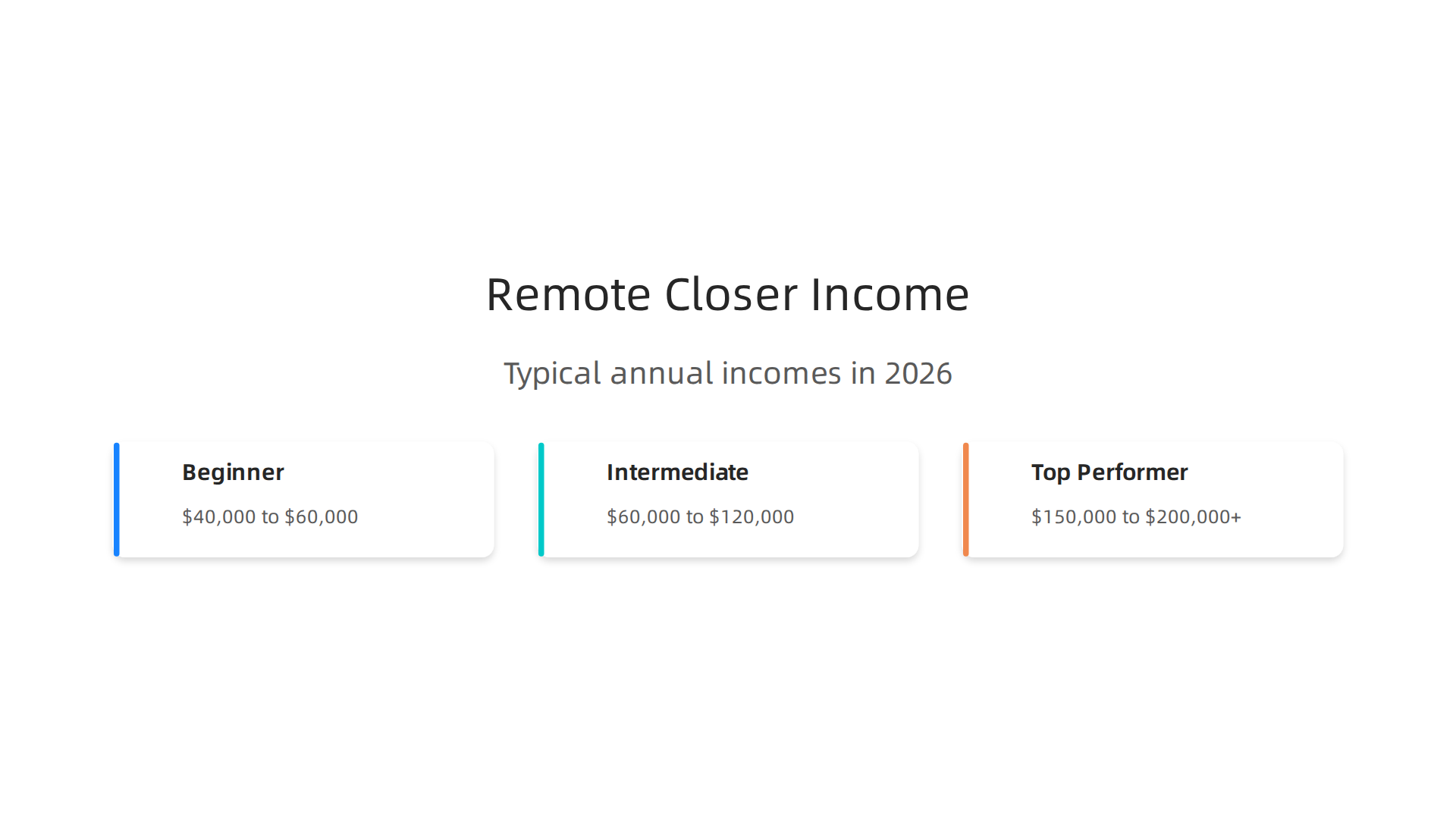
Top closers can earn well over $200,000 per year. But most people start in that $40k to $60k range. That is still a solid income, especially compared to many part time remote jobs that barely pay above minimum wage.
Here is another angle that matters a lot. Many companies hiring remote employees are open to working with closers from anywhere. This is great news if you are a freelancer overseas. You can earn in US dollars or euros while living somewhere with a much lower cost of living. That $50,000 salary can feel like $100,000 in your local economy. The World Bank notes that employment solutions are often more effective in low and middle income countries because the income goes further. That is a huge advantage when you are hiring a freelancer overseas or working as one yourself.
If you want to aim for those top tier earnings, you need the right strategy. Check out our guide on how to land enterprise remote sales roles with six figure pay in 2026. It shows you the exact path from beginner to high earner.
The Skills You Need to Succeed as a Remote Closer
Here is the truth. Many experienced salespeople actually struggle when they move to remote work. Why? Because in person charm does not always translate through a screen.
High ticket closing requires two types of skills. First, you need strong soft skills like building rapport quickly and active listening.

You also need technical skills like using a CRM and running video sales calls. The best training programs in 2026 combine both so you learn how to handle objections on Zoom and track deals in your pipeline.
The good news? You do not need years of experience to start. Beginners can build these skills through structured training and practical frameworks designed for remote sales. It takes deliberate practice but the path is clear.
If you are wondering which part time remote jobs help you build these skills without pressure, many people start in entry level sales roles first. Our guide on how to land remote jobs with no experience in 2026 covers the exact first steps.
Once you master rapport and video sales, you become much more attractive to remote companies hiring for closing positions.
Core Competencies: From Cold Outreach to Closing
Every high ticket closer needs four core skills. You must prospect to find leads, present your offer clearly, handle objections without getting defensive, and close the deal.
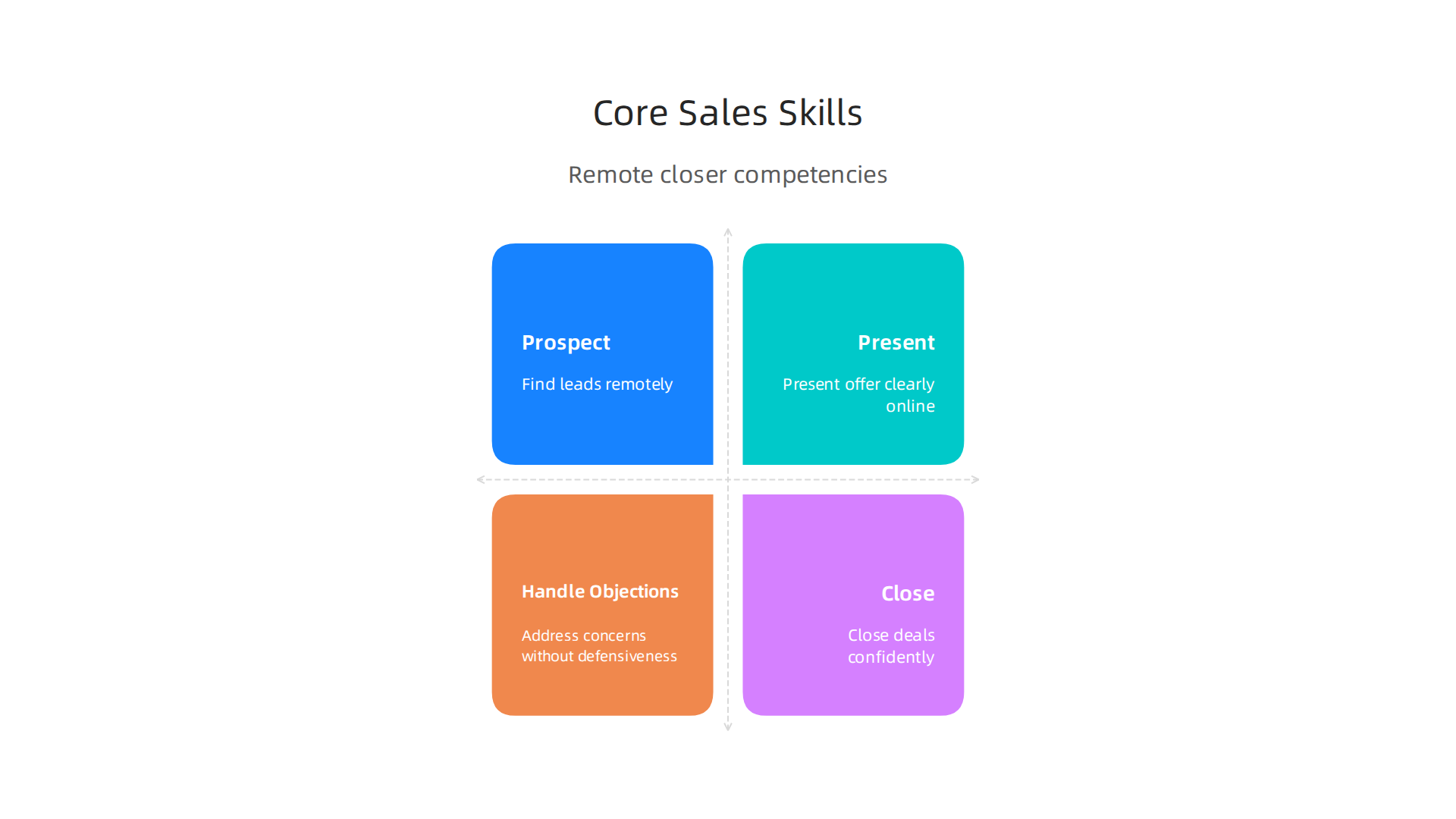
These steps have stayed the same for decades. But in 2026, doing them remotely changes everything.
Here is what remote adds to the mix.
First, you need strong video presence. A shaky camera or bad lighting hurts trust before you say a word. You also need async communication skills. Many deals now involve emails, voice notes, and text messages between live calls. And self discipline is non-negotiable. No one watches you clock in. You simply produce or you do not.
The tools matter too. You should feel comfortable with Zoom for video calls, Calendly for scheduling, HubSpot for tracking leads, and sales dialers for outreach. The best sales training programs in 2026 teach both the human skills and the tech stack together.
If you are considering hiring a freelancer overseas to handle early sales stages while you focus on closing, make sure they also understand these remote tools. Many remote companies hiring today expect every team member, even part time help, to know the basics.
Want to see how these competencies connect to real career growth? Read our guide on how to find the best remote jobs and build a high ticket sales career. It walks you through the exact path from learning the skills to landing the role.
Where to Get Legitimate Training (and Avoid Mediocre Courses)
So you know the skills. Now where do you actually learn them the right way?
In 2026, the sales training market is huge. And not every course out there is worth your time or money. A lot of programs promise six figures fast but leave you with nothing but a shiny PDF.
Here is how to spot the good ones.
What real programs offer.
Look for mentorship from active closers, live practice sessions where you actually role play calls, and job placement support after you finish. The best sales training programs combine these elements together. Programs on Coursera or specialized agencies like New World Sales focus on real results, not hype. A great starting point for beginners is a free high ticket sales training masterclass to see if the field fits you before you invest.
What red flags to avoid.
Run from any program that guarantees a specific income, refuses to show real student testimonials, or asks for a large upfront fee with no refund policy. Legitimate training stands behind its results. Guides like the one from Adam Cerra explain exactly what healthy training looks like.
Free resources can help too.
There are solid free high ticket sales training options like webinars, podcasts, and YouTube videos. They are great for building foundational knowledge. But for most people, free content alone does not lead to a job. Structured training with coaching and community gives you the push you need to actually start closing.
Once you finish strong training, you will be ready to apply to the best remote companies hiring in 2026. And as you grow, you might even consider hiring a freelancer overseas to help with lead generation while you focus on closing the big deals.
Where to Find Legitimate Freelance Remote Sales Opportunities
You have the training. Now you need the actual gigs. In 2026, the best places to find freelance remote sales work are a mix of general platforms, direct outreach, and smart networking.
Start with specialized platforms. Marketplaces like Upwork, Fiverr, and FlexJobs connect you directly with companies hiring remote employees.

These sites let you build a profile, showcase your sales wins, and apply to vetted opportunities. They are great starting points for beginners.
Go beyond the job boards. The best roles often come from direct outreach. Identify SaaS companies or agencies that match your skills and send a short, personalized pitch. For a full strategy on landing those entry level roles, check out how to land remote jobs with no experience.
Network in the right places. Linkedin and sales communities like the Remote Closers Club are full of hidden opportunities that never get posted publicly. Join conversations, share your wins, and connect with people already doing the work. To dive deeper into finding the best remote jobs, read our guide on how to find the best remote jobs and build a high ticket sales career. The combination of platforms, outreach, and networking will open more doors than any single method.
Top Platforms for Finding Remote Closing Work
Now let’s get specific about where to find remote closing work. Not all platforms are the same. Some help beginners get started, while others connect you with companies hiring remote employees for serious, high paying roles.
General freelance marketplaces like Upwork, Fiverr, and Freelancer are excellent entry points. They let you build a profile and find your first clients. As Upwork notes, these sites are great for getting started, but they are very competitive. You may need to take a few lower paying gigs to build your reputation and reviews.
Niche sales job boards attract higher quality leads. Sites like SalesJobs.com and RemoteSalesJobs.com are made specifically for sales professionals. The companies posting there understand the value of a good closer. They are less focused on "hiring a freelancer overseas" and more focused on finding a true expert. If you want to target these premium roles, check out our guide on high ticket closer jobs remote.
Company career pages and LinkedIn job alerts are goldmines for finding contract and part time remote jobs. Many top SaaS companies prefer to hire closers directly. Set up specific alerts on LinkedIn for terms like "remote sales closer" or "commission only sales". When you apply directly on a company’s career page, you avoid the bidding war of public job boards. For a step by step plan on getting these high value roles, read our article on how to land enterprise remote sales roles with six figure pay.
No single platform is the best. The most successful remote closers combine all three approaches to keep their opportunity pipeline full and growing.
Focusing on a Niche to Stand Out
So you know where to look for work. But do you know what will make employers pick you over dozens of others? The answer is specialization.
General closers are everywhere. But a closer who truly understands one industry? That is rare. Think about it. If you were hiring a freelancer overseas to close deals for your SaaS company, would you choose someone who sold everything from real estate to coaching? Or would you pick the person who lived and breathed your product category?
Here’s the truth. Companies hiring remote employees want a closer who speaks their language. They do not want to teach you their market. They want you to start closing on day one.
Pick one niche and own it. The best paying part time remote jobs and full time roles often go to specialists. For example:
| Niche | Why it pays off |
|---|---|
| SaaS (software) | You understand subscription pricing, demo calls, and tech objections. Many SaaS companies need remote closers who can handle complex sales cycles. |
| Real estate | You know property investment terms, lead sources, and how to handle high value deals. |
| High ticket coaching | You understand program enrollment calls, client psychology, and overcoming money objections. |
How do you get niche knowledge? You can learn through research, past work experience, or quick certifications. For instance, the NetSuite consulting field is expanding fast in 2026. Earning a certification like that immediately signals to remote companies hiring that you are a specialist, not a generalist.
When you focus on one niche, you stop competing on price. You start competing on value. And value wins every time.
Ready to pick your niche and find your first role? Check out our guide on how to land remote jobs entry level no experience in 2026 for a step by step plan. Even beginners can specialize early.
How to Avoid Scams and Verify Legitimate Clients When Hiring a Freelancer Overseas
Scams target both freelancers and businesses. When you are hiring a freelancer overseas, you want dependable work. When you are freelancing, you want guaranteed pay. Bad actors ruin trust for everyone.
Protect yourself with three simple steps.
First, check company presence. Look for a real website, genuine LinkedIn profiles, and honest client reviews. Second, ask for references. Legitimate partners willingly share past client experiences. Third, use payment protection. Escrow services and trusted platforms hold funds until work passes approval.
Platforms with built-in safeguards like verified payments and dispute resolution add extra safety. Companies hiring remote employees through these systems face fewer issues.
Looking for more ways to find legitimate roles? Read our guide on how to find the best remote jobs and build a high ticket sales career. It covers where trusted remote companies hiring post their openings.
Red Flags in Job Listings and Client Communications
You find a listing for a part time remote job that promises $5,000 a week. You have zero experience. That is a giant red flag. Scammers know how to make offers look irresistible so you skip your normal caution.
Watch for these common warning signs when hiring a freelancer overseas or applying for gigs yourself.
- Unusually high pay for your skill level. Legitimate roles pay fairly based on experience. If it sounds too good to be true, it probably is.
- Requests for upfront fees. Real clients never ask you to pay for a background check, training, or access to a job board. Walk away.
- Pressure to act fast. Phrases like “only three spots left” or “apply now before it’s gone” are designed to stop you from thinking.
- Vague job descriptions. A listing that says “help with administrative tasks” but no details about the company, duties, or pay structure is hiding something.
- Poor communication quality. Emails full of typos, generic greetings like “Dear Candidate,” or a lack of a real company website mean the client is not professional.
- Payment demands via wire transfer, cryptocurrency, or gift cards. This is a huge red flag. Reputable remote companies hiring use standard payroll or escrow services.
If you see any of these signs, trust your gut. Legitimate companies hiring remote employees provide clear details and follow normal business practices. For more tips on identifying real opportunities, check out our guide on how to land remote jobs entry level with no experience in 2026. It walks you through safe steps to start your remote career.
Step-by-Step Verification Process
You have spotted the red flags. Good. Now here is how to check if a client is actually worth your time. This step by step process matters even more when hiring a freelancer overseas because you cannot just drive to their office.
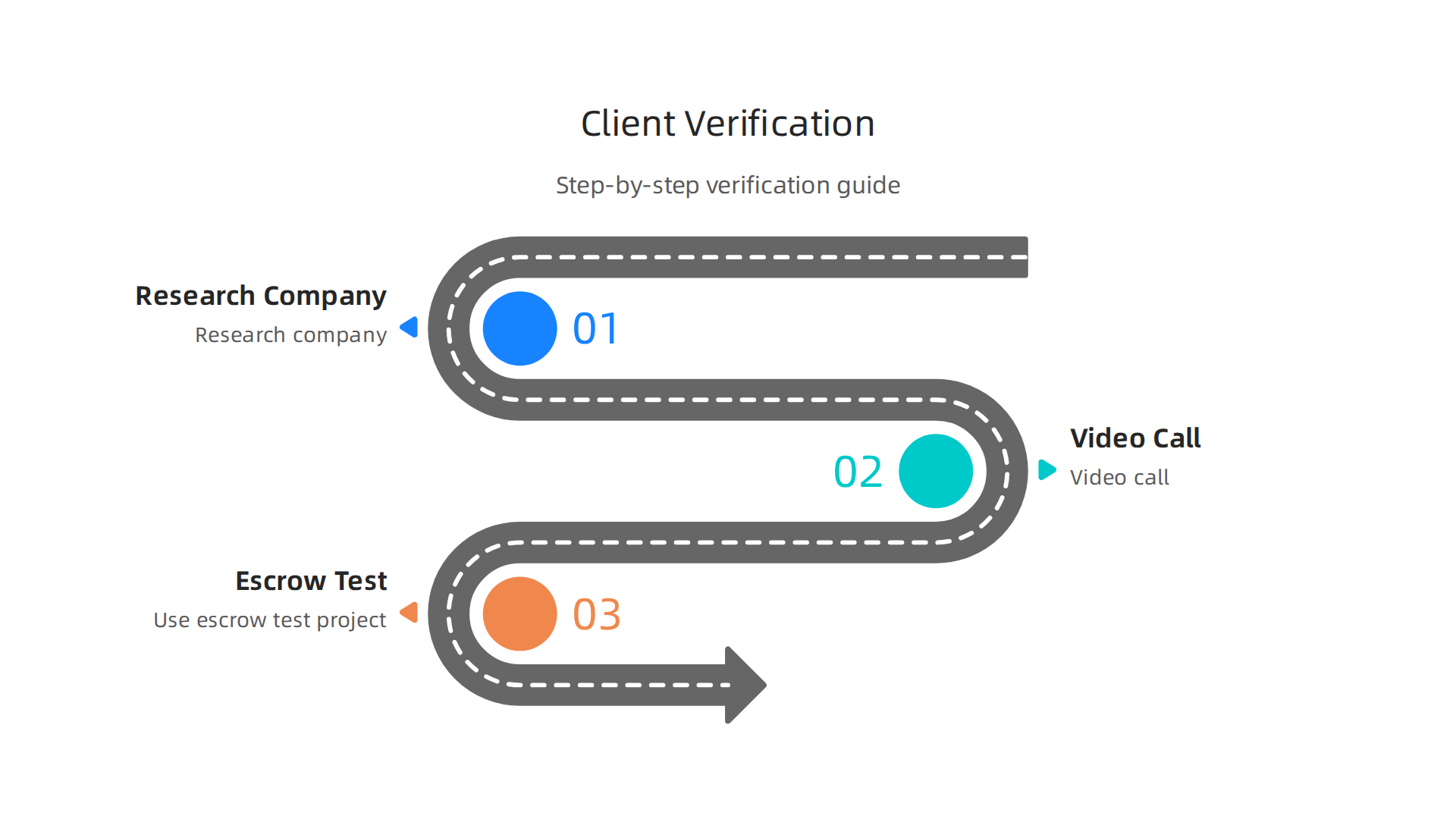
These steps work for part time remote jobs and full time gigs alike.
Step 1. Research the company online.
Go to LinkedIn and see if the company has real employees with real profiles. Visit Crunchbase to check for funding and history. Look up the company on Glassdoor to read reviews from people who have worked there. Legitimate remote companies hiring leave a trail. If you find nothing at all, that silence is a warning sign.
Step 2. Request a video call.
Real clients do not hide. Ask for a face to face video meeting. During the call, ask specific questions. What exactly does the company sell? Who else is on the team? How do you handle payments and contracts? Clients used to companies hiring remote employees will answer openly. A scammer will make excuses or rush to get off the call.
Step 3. Use escrow services and start with a small test.
Never jump into a huge project right away. Use an escrow service like Escrow.com or set milestone payments so you get paid as you work. Ask for a small paid test project first. This proves the client is serious and shows you can deliver. If they refuse a test or insist on full payment upfront, that is a major red flag.
Following this process protects your time and your income. For more tips on finding real opportunities, check out our guide on how to land remote jobs entry level with no experience in 2026.
Building Your Personal Brand and Credibility as a Remote Closer
You have learned how to spot fake clients. But here is the other side of the coin. Remote companies hiring good closers also check you out. That is why your personal brand matters more than ever in 2026.

A strong brand makes you stand out. It helps you command higher rates and attract serious opportunities instead of chasing them. The first step? Start sharing what you know. Post on LinkedIn about your sales wins. Make short videos breaking down a tough objection. Write a quick blog about your best closing tip. This kind of content marketing shows you know your stuff. According to a complete guide to personal branding in 2026, B2B leaders who build trust through content see more and better opportunities.
But words are not enough. You need proof. Collect testimonials from every happy client. Build a simple portfolio of case studies that show real results. A professional portfolio can be as basic as a Google Doc or a page on your site. When companies hiring remote employees see that you have a track record, they trust you faster.
For more ideas on finding real opportunities that value your skills, check out our guide on how to find the best remote jobs and build a high-ticket sales career. Your brand is your best asset. Invest in it.
Optimizing Your LinkedIn and Online Presence
Your LinkedIn profile is often the first thing people see when they are hiring a freelancer overseas for a remote closer role. So make that first impression count. Start with your headline. Do not just put “Sales Professional” or “Closer.” Instead, say something like “High-Ticket Remote Closer | I Help Companies Close Deals Virtually.” That instantly tells remote companies hiring exactly what you do and who you serve. Your summary should back that up with a short story and a promise of results.
Next, share your knowledge regularly. Post short insights about objections you handle, deals you win, or trends you see in 2026. Comment on posts from industry leaders. This keeps you visible and builds trust over time. According to a guide on building a personal brand in 2026, consistent engagement is what turns a profile into a magnet for clients.
Finally, ask for recommendations. Reach out to past clients or managers and request a quick LinkedIn recommendation. Even two or three strong testimonials make a huge difference. They prove you deliver real results. If you are just starting out, consider whether part time remote jobs or smaller projects can help you gather those first references. For more tips on getting your foot in the door, read our guide on how to land remote jobs entry level no experience in 2026. A polished online presence puts you ahead of most other closers, so invest the time.
Proactive Outreach: Using Your Brand to Get Hired
Your optimized LinkedIn profile is a great start. But you cannot just sit back and wait for offers to roll in. You need to go after them. Proactive outreach, like cold emails and DMs, works best when you use your personal brand to start real conversations.
Here is the thing. Most people send the same generic message to every company. That almost never works. When a company is hiring a freelancer overseas, they get hundreds of those. So stand out. Send a short, personalized message that shows you have done your homework. Mention something specific about their product, their sales page, or a challenge they might face. Then share a quick insight tied to your skills. That instantly makes you more credible than the crowd.
A great way to open the door is to offer a free audit or consultation. Offer to look at one piece of their sales process and give honest feedback. For example, you could say "I noticed your website asks visitors to book a call, but the page does not mention the outcome they will get. I have an idea that could lift conversions by 20%. Want to hop on a 10-minute call?" This shows value before you ask for anything. According to a guide on personal branding in 2026, building trust through small, helpful actions is what turns a cold lead into a warm client.
Finally, follow up without being annoying. Send a polite follow-up after three days. Then one more after a week. Keep it short and focused on the value you can bring. Companies hiring remote employees appreciate persistence when it comes from a real place of wanting to help.
If you are still building experience, part time remote jobs can give you the confidence to send those outreach messages with proof of results. For more detailed steps on starting strong, check out our guide on how to find the best remote jobs and build a high-ticket sales career. Your brand is your ticket inside. Use it to knock on the right doors.
Navigating Tax, Legal, and Payment Considerations for Overseas Freelance Closers
Okay, so you landed that first overseas client. Now comes the less exciting but just as important part. The legal and financial stuff. You need to get this right to protect yourself.
First, taxes. You have to understand your obligations in your home country and possibly in the country you work from. If you are a nonresident alien working for a US company, they might need to withhold taxes from your pay. The IRS explains this in Publication 515 (2026).
Some states, like Massachusetts, also have rules about taxing nonresident income. Talk to a tax pro who knows cross-border work.
Next, contracts. Always have a written agreement. Your contract should clearly state which country’s laws apply. It needs to cover payment terms, confidentiality, and who owns the intellectual property you create. This protects both you and the client.
Finally, how you get paid. Options like PayPal, Wise, and cryptocurrency have different fees and protections. Wise usually has low fees for currency exchange. PayPal is common but can have higher costs. Crypto offers speed but less buyer protection. Pick the method that works best for your situation.
If you are still figuring out the basics of landing those first gigs, our guide on how to find the best remote jobs and build a high-ticket sales career can help you build the foundation first.
Tax Implications and Compliance
Let’s get into the nitty gritty of taxes. It connects directly to everything we just talked about. If you are serious about working with US companies or hiring a freelancer overseas, you need to understand tax compliance.
First thing to know is double taxation treaties. These are agreements between countries. They stop you from paying tax on the same income twice. For example, your home country might tax the money. And the US might also want to tax it. But a treaty can reduce or even remove that second tax. The IRS explains in Publication 515 (2026) that US companies often need to withhold 30% from payments to nonresident aliens. A treaty claim can lower that rate. So understand the treaty between your country and the US.
Second, quarterly estimated taxes. In the US and many other places, independent contractors do not get a paycheck with taxes taken out. You have to pay your taxes yourself four times a year. If you miss these deadlines, you can face penalties. Make this part of your cash flow plan.
Finally, detailed record keeping is a must. You need to track every dollar you earn and spend for work. Save your contracts, invoices, and expense receipts. These records are your proof if the tax authorities have questions. The Internal Revenue Bulletin 2026-06 gives the official rates and rules, but your own accurate records make everything easier.
When you look at remote companies hiring contractors, they also want to work with someone who handles their own compliance smoothly. It shows you are a professional. Even if you are starting with part time remote jobs, building this habit early sets you up for success.
If you master the basics and want to aim for bigger deals, check out our guide on how to land enterprise remote sales roles with six-figure pay in 2026.
Essential Contract Clauses for Remote Sales Freelancers
A strong contract protects you and the company you work with. When you are hiring a freelancer overseas or being hired as one, never sign a contract without reviewing these key parts.
Scope of work. Be crystal clear about what you will do. List the specific sales activities, expected outcomes, and any limits on your role. This keeps you from being asked to do free extra work.
Payment terms. This is where many problems start. Define your commission structure (percentage of closed deals, tiered rates) and the payment schedule (net 30, net 60). The SEC notes that sales commissions are often treated as incremental costs of acquiring customer contracts. Make sure your contract spells out exactly when commissions are earned and paid. Also clarify if you get paid on recurring revenue or only the first sale.
Termination clauses. Know how either side can end the deal. Is it 30 days notice? Immediate for breach? Protect yourself from getting cut off right before a big commission is due. Many remote companies hiring freelancers include "for cause" termination. Read that definition carefully.
Non-disclosure and non-compete provisions. You will likely see language that tries to stop you from working with competitors for months after leaving. Be cautious of overly restrictive terms. Some clauses can prevent you from earning a living. Do not agree to a non-compete that is too broad in time or geography.
Dispute resolution. The contract should say how you will handle disagreements. Arbitration is common and faster than court. But it can also be expensive. The choice of law clause matters too. If the contract says disputes are resolved under California law, you need to know what that means for you. The Mass.gov page on nonresident income shows how states treat out-of-state contractors differently. Do not overlook this part.
Even for part time remote jobs, these clauses matter. A good contract lets you focus on selling instead of worrying about getting paid. If you want to move into bigger deals, check out our guide on how to find the best remote jobs and build a high-ticket sales career.
Creating a Supportive Network and Career Growth Plan
Your contract is secure, but what about the quiet days of working alone? When you are hiring a freelancer overseas or working as one yourself, isolation can drain your energy fast. That is why you need to build a support network on purpose.
Join a mastermind group, a Slack community, or a professional association. Many remote companies hiring freelancers run their own communities where you can share tips and wins.

These groups give you peer support and keep you from feeling stuck on your own.
Growth does not stop once you land a role. Keep sharpening your skills with certifications, workshops, and mentorship. Building a personal brand is a smart way to attract better clients and stand out. A 2026 guide to personal branding in B2B explains how leaders build trust and authority through their online presence.
If you want to step into higher paying work, check out our guide on high-ticket closer jobs remote as the next step for digital marketing interns. It shows a clear path forward from where you are now.
Joining the Right Sales Communities
You have your contract and a growth plan. But where do you find the people who actually get what you do? The right sales community changes everything.
Some groups are free, like Reddit forums or LinkedIn groups. They can be helpful, but the signal to noise ratio is low. You might scroll through tons of updates before finding one solid tip.
Paid communities offer more structure. They usually have active engagement, mentors who answer questions, and job boards with vetted opportunities. That is exactly what you need when you are hiring a freelancer overseas or working as one yourself. You want a place where everyone is serious about closing deals.
One example is the Remote Closers Club community. It brings together sales pros who share strategies, celebrate wins, and post real job leads. Being part of a group like that also helps you build a personal brand. A complete B2B guide on personal branding in 2026 explains how leaders gain trust by participating in the right networks.
If you are still early in your career, check out this guide on how to find the best remote jobs and build a high-ticket sales career. It walks you through choosing the best opportunities and the communities that support them.
The key is to pick a group that matches your goals. Look for mentorship, active conversations, and real job leads. That is how you turn a solo journey into a team effort.
Setting Goals and Tracking Progress
Now you are part of a community that gets it. What is next? You need a clear plan to turn that support into results. The fastest way to fail is to wing it.
Start with short-term goals. For example, land your first client within 60 days. That is specific and achievable. Pair that with a long-term goal like hitting consistent $10,000 months by the end of the year. Whether you are hiring a freelancer overseas or building your own practice, these targets keep you focused.
Next, track the numbers that matter. Count how many messages you send each week. Watch your conversion rate as leads turn into conversations. Monitor your income and also check client satisfaction through quick feedback. Tools like a simple spreadsheet or a CRM can help. Many remote companies hiring freelancers expect you to report these metrics, so building the habit now pays off.
Also consider part time remote jobs as a stepping stone. They let you test different niches without full risk. As you grow, companies hiring remote employees often look for people who already track their performance. It proves you are serious.
Here is the real key: review your data every month. Ask what worked and what did not. Adjust your outreach style, your offer, or your target market. A complete B2B guide to personal branding in 2026 explains how top earners regularly audit their approach and pivot based on feedback.
If you are just starting out, the article on how to find the best remote jobs and build a high-ticket sales career includes a simple goal-setting framework you can copy today.
Tracking progress turns hope into certainty. Do it every week, learn from the numbers, and you will reach those big targets sooner.
Summary
This article is a practical roadmap for becoming a remote high-ticket closer in 2026, aimed at beginners and people leveling up. It explains why remote closing is a legitimate, high-paying career and gives realistic income ranges by experience level, plus the core competencies you must develop—rapport, objection handling, video presence, and CRM skills. You’ll learn where to find legitimate jobs (marketplaces, niche boards, direct outreach), how to vet companies and courses to avoid scams, and what proper contracts, tax rules, and payment methods to insist on. The guide also stresses the value of niching, building a personal brand, and using communities and tracking to accelerate results. By following the step-by-step checks and outreach strategies here, you’ll be able to spot real opportunities, choose the right training, protect your income, and start closing remote high-ticket deals with confidence.