

Let’s be real for a second. Finding a legitimate way to land a high paying sales role from home in 2026 feels harder than ever.

The competition is fierce, and for every real opportunity, there seem to be a dozen low quality listings or outright scams waiting to waste your time.
This is exactly where FlexJobs has built its reputation. Unlike free boards that are full of junk, FlexJobs focuses purely on quality. They use a rigorous screening process to vet every single listing so you can feel confident the job you apply for is real. Over 135 million people have used their resources, and they offer everything from part time jobs to fully remote work.
But here is the thing. Even with a premium tool like FlexJobs, finding a high-ticket closing role is not automatic. If you are an aspiring closer, you cannot just search for "sales" and hope for the best. You need a targeted strategy that cuts through the noise and puts you in the interview room for the roles that actually offer significant commission and six-figure potential.
This guide is designed to do exactly that. We will walk through research-backed steps to help you maximize FlexJobs remote jobs specifically for a career in high-ticket sales. We will cover how to filter for the right companies, how to spot opportunities that value skill over experience, and how to position yourself as the candidate they want to hire.
If you are ready to stop wasting time on bad leads and start treating your job search like a high-value sales process, you are in the right place. Let us dive into how to make FlexJobs work for you.
Get Started with Our Full Guide
1. Use Advanced Search Filters to Pinpoint High-Paying Remote Closing Roles
Most people waste hours scrolling through job boards because they don’t use the right filters. But with FlexJobs remote jobs, the platform makes it easy to skip the noise and find exactly what you need.
The secret is in the advanced search tools. FlexJobs offers filters for salary range, job type, and industry. For high-ticket closing, you want to combine "Sales" with "Remote" and set the salary filter to "$100k+" or more.
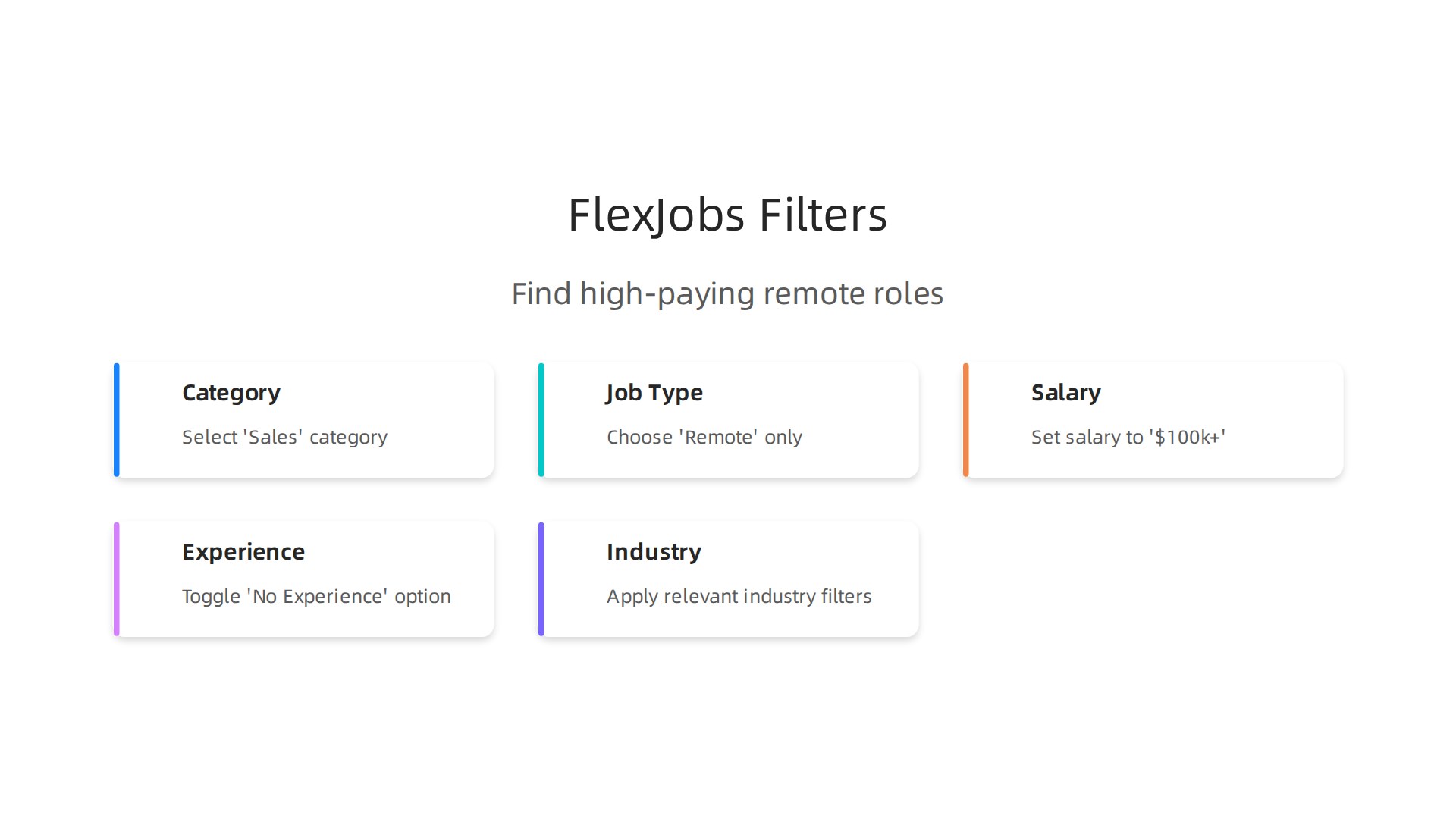
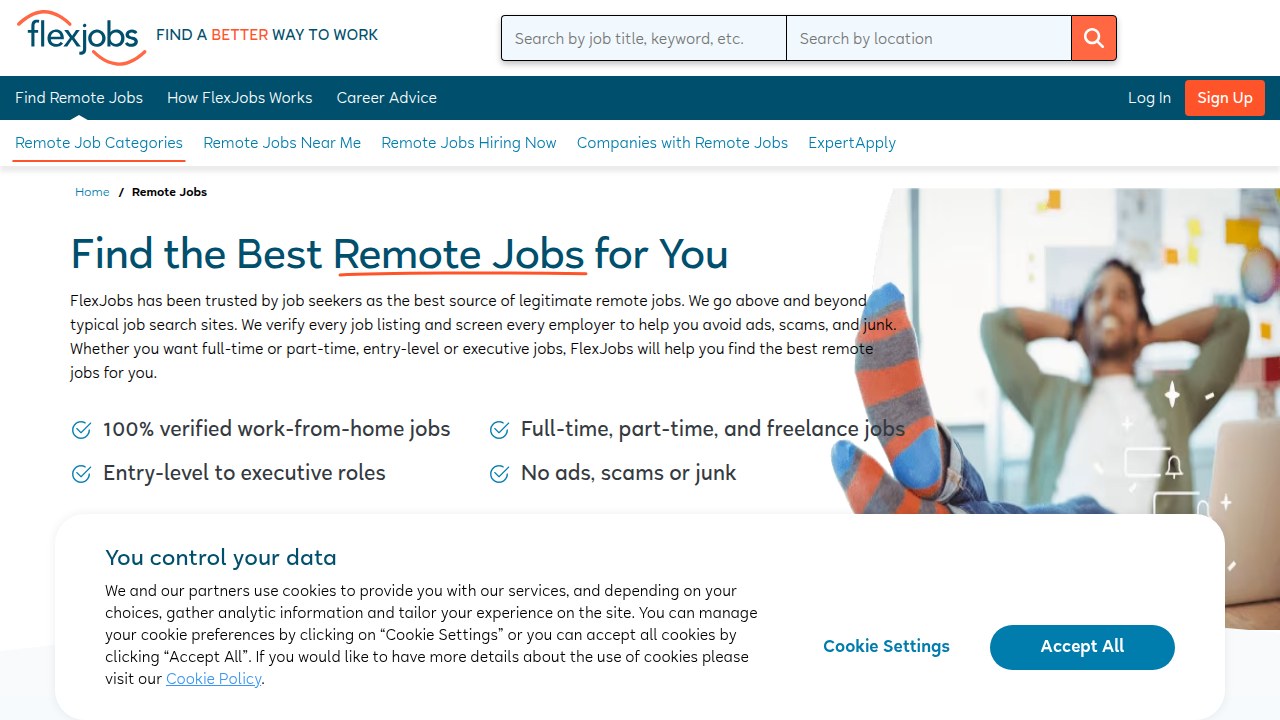
This narrows your results to roles that actually offer the commission potential you are looking for. You can also look for part-time remote closing roles if you want to start smaller while building experience.
If you have little to no sales background, do not worry. Use the category filters to find no experience jobs that still focus on sales. Many companies list entry-level closing positions because they care more about teachable skills than a long resume.
Another feature that saves time is saved searches. You can set up a custom search for "high-ticket closer" or "remote account executive" and get daily email alerts when new listings appear. This way, you never miss a fresh opportunity. According to FlexJobs, their rigorous screening process ensures every listing is legitimate, so you can apply with confidence.
Want to learn how to tailor your resume for these roles? Check out our complete guide on landing entry-level remote jobs. It walks you through exactly what hiring managers look for in 2026.
Get Started with more free resources to help you lock in your first high-paying remote closing role.
2. Leverage Company Research Tools to Identify Legitimate Employers
Let’s be real for a second. Nothing feels worse than spending an hour on a job application, only to find out the company is a ghost job or a flat-out scam. It wastes your time and crushes your motivation. That is why vetting a company before you apply is so important in 2026.
FlexJobs remote jobs platform gives you a huge advantage here. Every single listing is already hand-screened for legitimacy. But the real power move is using their company research tools.
Each company profile on FlexJobs includes reviews from real employees, funding history, and a special "remote-friendliness" rating.

This tells you if the company truly supports remote workers or if they just list the jobs. According to a detailed review by Scale.jobs, FlexJobs has a dedicated team that spends over 200 hours daily vetting job postings. That means the information you get is reliable.
How do you use these tools? Start by searching for a company name in the FlexJobs search bar. The profile will show you an overall rating, how many remote jobs they have posted, and reviews from past and present employees. Look for patterns in the reviews. Do employees talk about good work-life balance? Do they mention high earnings? This helps you know if the role is a good fit for your goals. You can also see if the company has received funding. A company with solid funding is more likely to be stable and pay well.
Once you find a company that looks good, cross-reference their profile with LinkedIn to see current and past employee experiences. If you need help building a strategy to find these legitimate roles, check out our guide on how to land remote jobs entry level no experience in 2026. It walks you through the whole process from start to finish.
Ready to start your search with confidence? Explore our full set of resources on the Remote Closers Club blog to fast-track your career.
3. Take Advantage of Career Coaching and Skill Assessments Tailored to Remote Sales
Let’s be honest. A lot of people find remote job listings, but they freeze when it’s time to actually interview or pitch themselves. That is normal. You might have the desire to succeed in a high ticket closer remote job, but you don’t know if you have the right skills yet. That gap between wanting a role and being ready for it can feel huge.
Here is where FlexJobs remote jobs platform offers something most job boards skip. They give you free career coaching sessions and skill assessments. These tools focus on things like sales aptitude, communication skills, and emotional intelligence. According to a guide from ThrivingTech, success in remote high ticket closing depends on a mix of technical skills, emotional intelligence, and personal discipline. The assessments help you see exactly where you stand.
How does this work in practice? When you log in to your FlexJobs account, look for the career coaching section. You can book a session with a real coach who understands online sales roles.

They will look at your current resume and talk through your goals. Then you take a skill assessment. The results will show you what you are good at and where you need growth. For example, the role of a remote closer requires strong listening skills and confidence in guiding conversations. If your assessment shows you need work on listening, the coach can give you a plan to improve.
You can also pair these coaching sessions with FlexJobs’ library of webinars. Some focus specifically on high ticket sales and remote closing techniques. Watching these alongside your coaching gives you a full learning path. If you are just starting out and want a complete roadmap, our guide on how to land remote jobs entry level no experience in 2026 walks through the exact steps.
Once you build your skills and know what roles fit you, you can find jobs with confidence. The coaching and assessments are your practice field.
Ready to see how the whole process comes together? Explore our full set of resources on the Remote Closers Club blog to start your journey today.
4. Network Strategically Using FlexJobs’ Community Features
You have built your skills and know your strengths. Now it is time to connect with the right people. This is where FlexJobs remote jobs platform really shines beyond just listings. They offer community features that can help you find remote jobs faster through real connections.
Inside your FlexJobs account, you will find industry-specific groups and forums. These are spaces where remote closers share tips, job leads, and advice. According to FlexJobs’ own benefits page, subscribers get access to curated remote jobs, freelance gigs, and part-time roles. But the community part is where the hidden opportunities live.
When you join a group for high ticket sales professionals, you can ask questions and share your wins. Other members will notice you. Sometimes they refer you to roles they know about. This kind of warm referral is gold for anyone trying to land fully remote work.
There is also a dedicated forum called "Ask a Career Coach." You can post questions about your specific situation and get answers from experienced coaches. For example, if you are looking for no experience jobs in remote closing, you can ask the coach what skills matter most for beginners.
By engaging in these discussions, you raise your profile. People remember helpful members. Over time, those connections can turn into job offers or partnerships.
If you want a step by step plan for networking while job hunting, check out our guide on how to land remote jobs entry level no experience in 2026.
Ready to start connecting with other remote closers? Explore all our guides and community tips on the Remote Closers Club blog to take the next step.
5. Tailor Your Resume and Cover Letter for Remote Roles Using FlexJobs Templates
You have built your network and know where to look. But even the best FlexJobs remote jobs listing won’t help if your application gets overlooked. Here is the hard truth for 2026. Competition for fully remote work is fierce. In fact, only 4% of new job postings are fully remote, according to Robert Half. That means your resume and cover letter must stand out instantly.
FlexJobs gives you templates designed specifically for remote roles. These are not generic documents. They are built to highlight the traits hiring managers look for when they find remote jobs on this platform.
Here is what you need to focus on when customizing for high ticket closing:
- Self-motivation. Remote sales roles require you to manage your own time. Show examples of hitting targets without supervision.
- Closing metrics. Numbers matter. Include your close rate, average deal size, and monthly revenue generated. Be specific.
- Remote tool proficiency. Mention CRM systems like Salesforce, video call software like Zoom, and communication tools like Slack. Hiring managers want to know you can work remotely today.
Use the FlexJobs "Resume Review" service. This is a free perk for subscribers. You submit your resume and a professional gives feedback tailored to remote sales positions. They will tell you if your closing metrics are clear enough or if your remote experience stands out.
If you are just starting out and looking for no experience jobs, do not worry. You can still use these templates. Focus on transferable skills like persistence, communication, and anything you have done that shows you can work independently.
Your cover letter should tell a quick story. Start with one sentence about why you love remote work. Then share a specific sales win. End with what you want to contribute to their team.
For a full step by step guide on crafting your application, check out our guide on how to land remote jobs entry level no experience in 2026.
Ready to build a resume that gets noticed? Explore our guides, templates, and job resources on the Remote Closers Club blog to take the next step.
6. Avoid Scams: How FlexJobs Vets Every Listing and What That Means for You
Now that your resume is ready, you need a safe place to use it. Here is the problem with many job boards in 2026. They are full of fake listings and scams. Scammers know people want remote work, so they post fake jobs to steal your money or personal info. It is a huge waste of time and energy.
FlexJobs solves this by being different. They do not just let anyone post a job. Their team manually reviews every single listing.
In fact, they spend over 200 hours every day vetting job postings, according to Scale.jobs. This is why sites like FinanceBuzz pick FlexJobs as their top choice for finding remote work. FlexJobs hand-screens every listing so you are not wasting your energy on scams and ghost jobs, as The Interview Guys explains.
What does this mean for you? It means you can search for flexjobs remote jobs with confidence. You know the listings are real. But you still need to stay smart. Never pay a company for a job. Always verify the company’s contact info independently. If something feels off, trust your gut.
This vetting process saves you hours of filtering through junk. It lets you focus on actually applying for fully remote work that pays well.
If you want to learn more about finding safe, legitimate remote roles, check out our guide on how to find the best remote jobs and build a high-ticket sales career.
Ready to start your safe job search today? Get Started with our guides and resources at Remote Closers Club.
7. Track Your Applications with FlexJobs’ Dashboard to Stay Organized
So you have a safe place to search for flexjobs remote jobs. Great. But sending out dozens of applications without a system is a fast track to confusion. You might forget which roles you applied for, miss a follow-up, or lose track of an interview invite.
FlexJobs gives you a personal dashboard that solves this problem. It centralizes every application, status update, and interview invite in one spot. You do not have to dig through your email or check multiple tabs. Everything is right there. As the Remote Job Assistant review notes, FlexJobs provides career tools that help you manage your search effectively.
Here is the best part. You can set reminders for follow-ups. Did you apply to a fully remote work position three days ago? The dashboard can tell you when to reach back out. Over time, you can see which strategies get you responses. For example, maybe part time jobs with a specific keyword give you more interviews. Track that.
For remote closers, this is even more important. You need to know your conversion rate. How many applications lead to a call? How many calls lead to an offer? The dashboard helps you spot which no experience jobs or higher tier roles are worth your time. You start treating your job hunt like a sales pipeline.
If you want to learn how to apply this same organized approach to landing roles on other platforms, check out our guide on how to land remote high-ticket closing jobs on LinkedIn, Glassdoor, and ZipRecruiter.
Ready to get your job search organized? Get Started with our guides and resources at Remote Closers Club.
8. Combine FlexJobs with LinkedIn for Maximum Reach
You have your FlexJobs dashboard organized and your applications tracked. Now it is time to put the power of two platforms together. FlexJobs gives you a safe list of vetted openings. LinkedIn helps you connect with the actual people behind those openings.
Here is the strategy. First, use FlexJobs to find remote jobs that match your skills. Look for roles like fully remote work in sales or high-ticket closing. Once you spot a company you like, copy the company name. Then go to LinkedIn and search for that company. Look for hiring managers, sales directors, or team leads. Send them a short, professional connection request. Mention that you found the role on FlexJobs and are excited about their team. This kind of targeted outreach can set you apart from dozens of other applicants.
You can do the same for part time jobs or even no experience jobs if you are just starting out. Every role on FlexJobs has a legitimate company behind it. That makes your LinkedIn research much easier. According to the Coursera guide on remote sales jobs, networking is a key step in landing a work-from-home sales role. Export the list of companies you applied to from FlexJobs. Then search for current employees in sales at those companies. Ask them about the culture or the interview process. People are often happy to share advice.
Another smart move is to share your FlexJobs activity on LinkedIn. Post something like “Just saved a new fully remote work opportunity on FlexJobs. Anyone here work at [Company Name]? I would love to learn more.” This signals to recruiters that you are serious and proactive. It also makes your profile more visible.
Sales is one of the fastest growing remote career categories in 2026, according to FlexJobs themselves. Combining their vetted listings with LinkedIn networking gives you a huge advantage. You are not just applying blindly. You are building real connections.
To learn more about using LinkedIn to land high-ticket closing roles, check out our guide on how to land remote high-ticket closing jobs on LinkedIn, Glassdoor, and ZipRecruiter.
Ready to put this two-platform strategy into action? Get Started with our full library of resources at Remote Closers Club.
9. Prepare for Remote Interviews Using FlexJobs’ Resources
Finding flexjobs remote jobs gets you in the door. But the real challenge is acing the remote interview. That is where FlexJobs really helps. They offer specific guides on how to handle video interviews and remote closing scenarios. These are not generic tips. They are built for the exact roles you are applying for, like high-ticket closing or remote sales.
FlexJobs has a whole section called "Interview Tips." You can find advice on everything from lighting and background to answering common remote sales questions. They even offer a mock interview tool. This is a great way to practice without the pressure of a real call. Use it to get comfortable talking about your sales process over video.
One big thing in 2026 is showing you can use remote sales tools during the interview. Be ready to talk about your CRM experience or how you use video conferencing to build rapport. The US Remote Jobs Guide for 2026 stresses that interviewers look for tech comfort. FlexJobs helps you prepare for this by highlighting key skills like CRM proficiency and virtual demonstration techniques.
When you are going for fully remote work in sales, practice talking through a demo. Say something like, "I would share my screen and walk you through how I track leads." This shows you understand the tools of the trade. It works for part time jobs or even no experience jobs if you focus on your willingness to learn.
To learn more about preparing for specific roles, check out our guide on how to find the best remote jobs and build a high-ticket sales career.
Ready to nail your next remote interview? Contact Us for personalized tips on closing the deal.
10. Stay Organized and Persistent with FlexJobs’ Email Alerts and Saved Searches
You might think interview prep is the final step. But in 2026, the real trick is staying organized. FlexJobs remote jobs get snapped up fast. A recent study found there are now three times more remote jobs compared to 2020, but competition is still fierce (StrongDM). So waiting around to browse listings every morning is a bad plan.
Here is a better way. Set up daily or weekly email alerts on FlexJobs. You just pick your filters like "sales" or "high ticket closing" and let the job board send new postings right to your inbox. This way you never miss a fresh opening. You can also use saved searches. Instead of retyping all your criteria each time, you just click a saved link and instantly see new matches. Simple stuff.
Consistency matters more than you think. Check your alerts every morning. Apply as early as you can. Many roles are "first in, best dressed." This is especially true if you are looking for fully remote work, part time jobs, or even no experience jobs. Early applicants often get seen first.
To learn more about staying ahead of the competition, read our guide on how to find the best remote jobs and build a high-ticket sales career.
If you need help building a daily search routine, just Contact Us. We can walk you through a system that works.
Summary
This article shows how to use FlexJobs to find legitimate, high-ticket remote sales roles without wasting time on low-quality listings. It explains practical search tactics—like filtering for sales, remote, and $100k+ roles—plus saved searches and daily alerts to catch fresh openings early. You’ll learn how to vet employers using FlexJobs company profiles, reviews, and funding info, and how to avoid scams because every listing is hand-screened. The guide also covers career coaching, skill assessments, community networking, and resume templates tailored to remote closers so you can present measurable sales results. It explains how to combine FlexJobs leads with LinkedIn outreach, organize your pipeline via the dashboard, and prepare for remote interviews. By following these steps you’ll move from random applications to a targeted, trackable job-hunting system aimed at landing high-commission closing roles.